
Voices of EPUMC: Reflections on being a parish pastor
- webadmin6265
- 1 hour ago
- 13 min read
By Sarah Gardner

The life of a parish minister is often described as highly demanding and poorly paid. But it can also be immensely satisfying. EPUMC is blessed with four retired United Methodist ministers. Dale Beck, 76, served churches in Illinois, Colorado and Wyoming. Jim Mardock, 80, worked in Kansas, Montana and Colorado. Jay Vetter, 78, pastored in both Missouri and Nebraska, and Don Bailey, 82, was a parish minister in Colorado, Texas, Maryland and Montana. EPUMC member Sarah Gardner interviewed Mardock, Vetter and Beck in person and Bailey submitted his responses by email. Their answers have been edited for length and clarity.
Sarah Gardner: What church did you grow up in?
Jim Mardock: I was raised Presbyterian and Quaker. My dad came from a Quaker background and my mother was from a Presbyterian background and when you combine all that you get a Methodist. (laughter)
Dale Beck: I grew up Methodist.
Jay Vetter: I grew up in the EUB (Evangelical United Brethren) church which is now part of the United Methodist Church.
Don Bailey: I grew up Baptist.
Sarah Gardner: Tell me why you decided to go to seminary.
Jim Mardock: I ended up going to Baker University in Baldwin, Kansas (Methodist-affiliated) and when I was a junior I met Susie (Jim’s wife). She was from a strong Methodist family. I was trying to decide what I was going to do with my life. She has twin brothers. One was getting ready to go to seminary, the other to law school. I was trying to weigh that. Law school, seminary. Seminary, law school. Seminary won out. And I think what I really wanted to do was to teach. I was encouraged to become a teacher. But when I graduated (from ILIFF School of Theology in Denver) I was tired of school. So Susie and I decided to try a church. I should have stayed with teaching (laughter).
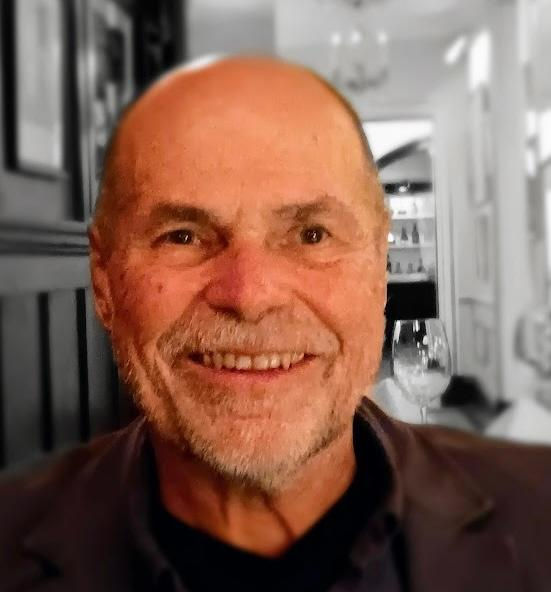
Dale Beck: I think I was just raised by a church. Even though my parents didn’t go very often I still went. I had friends there. I think when I was confirmed in eighth grade I sort of had this idea that I was going to be a minister. I know that’s weird but I had a great church experience with wonderful people who affirmed us. When I was in college the pastor asked me to start teaching a Sunday school class for the high school kids and so I did.

Jay Vetter: The biggest event of my childhood was when my dad became a Christian when I was nine years old. He was agnostic. My mother was baptized by Larry Leaming’s (EPUMC member) dad in a little country church in Nebraska. But my dad was anti-church. So I always knew that the church was full of hypocrites because that’s how my dad saw the church. He finally decided there was something he needed to commit his life to that he could never live up to fully. So he became a Christian and that influenced my life greatly. When I was in the seventh grade in confirmation our pastor told us about his call to ministry and I felt called to ministry. John Wesley said it was a like a fire burning inside. It was kind of like that for me. But I never told anybody. I was very cautious of affirming publicly that I felt called to the ministry.
Sarah Gardner: So this was like your secret with God.
Jay Vetter: Yes, so to speak.
Don Bailey: It was a second career for me. Both Barbara (his wife) and I worked for the Department of Health and Human Services in Kansas City. While at Central United Methodist Church we were invited to attend an Ecumenical Cursillo (a spiritual retreat). It was a moving experience that awakened something in me and I began teaching Sunday School. We moved to Denver where we sort of repeated the process at Hope United Methodist where, again, I taught Sunday School. Then one day I received a card from the members of my Sunday School class in Kansas City. It was filled with cash with a note that said ‘Quit stalling, get off your butt and get into seminary.’ Barbara enrolled me in a course at ILIFF School of Theology in Denver and the journey began. So why seminary? The nudge from Cursillo, the support of friends in both Kansas City and Denver, and a pushy wife, I guess.
Sarah Gardner: I’m curious about your first parish job. Did it prepare you for ministry?
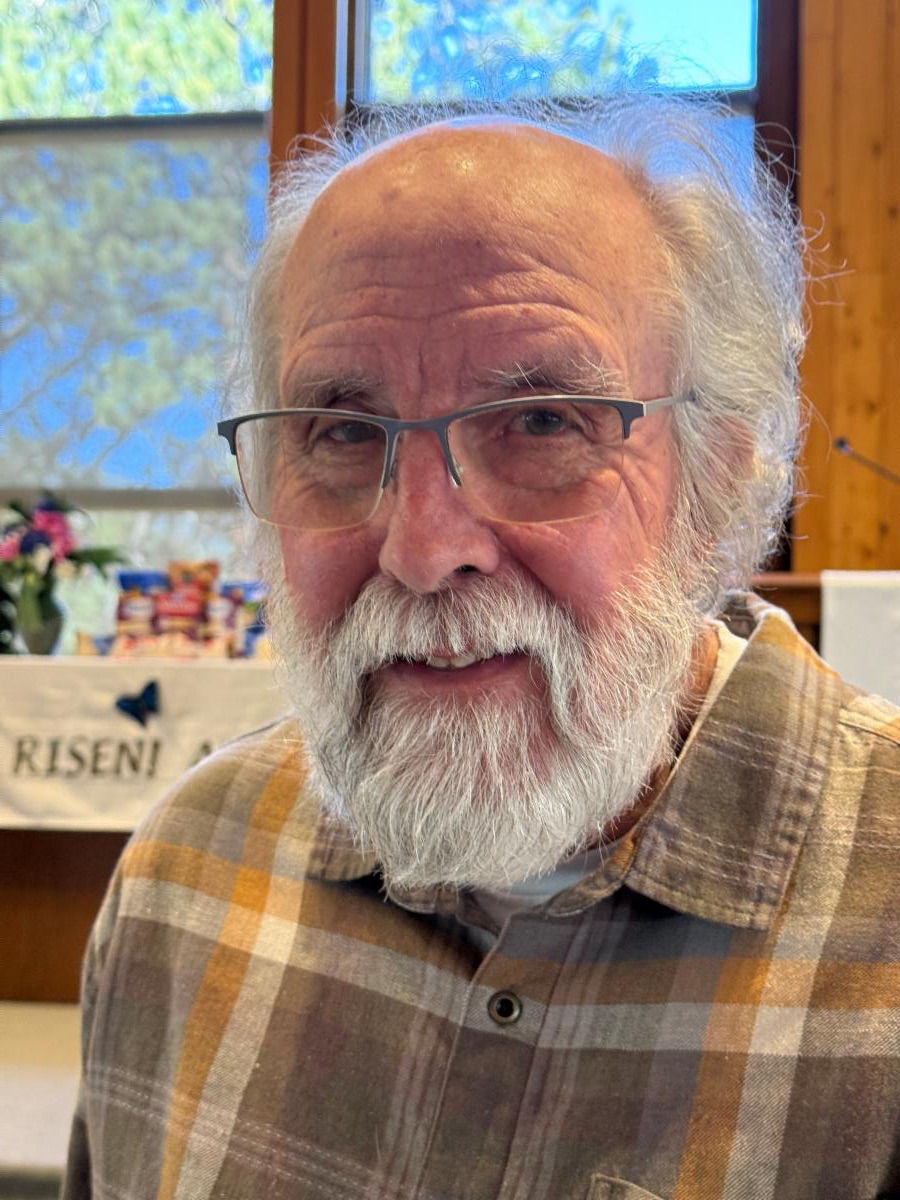
Jim Mardock: We took this little church and it was far more Baptist than it was Methodist. It was in a tiny town in Kansas. I wasn’t stupid about things but I was certainly not experienced. I needed to grow up more, get out in the world a little bit more. Everything about me had been school. I got called in to the district superintendent’s office and he said there was a delegation from the church saying they didn’t like the way I dressed in the pulpit. I didn’t wear a black suit.
Sarah Gardner: What did you wear?
I wore a sport coat.
Sarah Gardner: Did you have long hair?
Jim Mardock: I had cut it. But not to their length. This was 1971. I’d been involved in liberal churches in Denver before this. ILIFF was a liberal seminary. (Jim describes himself then as a hippie back then)
Sarah Gardner: And they read the Bible literally?
Jim Mardock: Yeah, or they just had a way of doing things and I didn’t fit into that. I tried. A lot of people liked me but it just didn’t feel right to me. I quit after a year and left the ministry. (Jim and Susie moved to Estes Park where he worked at the hardware store downtown for six years until he was offered a more lucrative job selling hardware goods.) Susie and I talked about the job offer over dinner at Heidi’s Hideaway at Picadilly Square. She said, ‘You’re not going to take the job, are you? You’re going back into the ministry, aren’t you?’ We had not even talked about it. She knew. On the way driving up the canyon after that job offer, I felt that “something.” It just spoke to me. Jim, you’re going the wrong direction. You need to get back in the ministry. (He accepted a parish in Missoula, Montana.)
Dale Beck: My first parish experience was an internship in Illinois. It was in a weird little town called Hoopeston and the football team was called the Cornjerkers. I kid you not. The senior minister started doing some odd things. By Christmas he’d had a lapse in the pulpit. He had a brain tumor. But he didn’t want to tell the district superintendent. He told me not to tell the district superintendent that he’s having brain surgery. I had to do everything for three months. My biggest memory was when the senior minister got back he was a little irritated with me. Things had gone too well!
Jay Vetter: I started serving a circuit of four country churches my second year of seminary in northern Missouri. All I did was preach, basically. They were little country churches and they were unmanageable. For me, seminary prepared me by teaching an “action-reflection model.” In seminary we did not get grades. At the end of every class we had to evaluate ourselves, our peers evaluated us, our professors. How have you grown, what did you learn? When I was an associate pastor and salary negotiations came around they weren’t going to give me a raise. And I said I don’t think that’s fair, I deserve a raise. I never would have said that if I hadn’t gone through that process in seminary. So the senior pastor then said, “Me too!” His appeal for a raise was that he had five kids. Mine was, I’m doing a good job (laughter).

Don Bailey: My first parish was John Collins UMC in Denver. I can gratefully say that with the Grace of God, it went quite well, but not without many issues such as an exploding boiler. Did seminary prepare me for parish ministry? Short answer – no. I’m not sure any education experience can prepare one for the breadth of issues a pastor is called on to address. Given the “committees” that the Methodist church requires and the additional ones that seem to evolve, I was blessed with previous management experience that helped tremendously.
Sarah Gardner: What does it take to be good at parish ministry? How do you meet all the expectations placed on you? What’s the most important part of the job?
Jim Mardock: The preaching was because that’s your public display, how people see you. But preaching also includes funerals and weddings.
Jay Vetter: And praying at public events or giving a baccalaureate, that kind of thing.
Dale Beck: The call to preach came more slowly for me. I thought ultimately I’d become a pastoral counselor. In seminary I had worked in an alcoholism treatment center in downtown Denver for a while. And eventually I got free training from a guy who was a disciple of Fritz Perls (Gestalt therapy). Ultimately though, I would say that preaching is…you HAD to do that. And in a big church you needed to learn how to be head of a staff.
Jim Mardock: I knew I wasn’t good at everything. I was a decent preacher. For pastoral counseling, I took extra courses and I grew a lot because in Kansas I was a volunteer chaplain (at Halstead Hospital, where he later served as chairman of the board). Boy, you learn quickly with that. One time I had 33 Methodists in that hospital all at the same time. I’d have pastors from western Kansas call and say “Hey, I have church members in the hospital, do you mind going and checking in on them?”
Jay Vetter: To me, the pastor’s lead role is to preach the Gospel and set the vision. And all these other things you need to be able to see that they get done but you may not need to be able to do them yourself.
Dale Beck: You find the right people, you rely on them, you support them, and you don’t let them get over their head.
Jay Vetter: And it IS work. It’s not like you find people and you don’t have to think about that anymore. You have to nurture and help them.
Don Bailey: Accept the fact that you cannot be all things to all people, although that may be the unspoken expectation of many of your congregants. Know your strengths and the areas where you need some assistance. Then, know your parishioners. There are undoubtedly knowledge, experience and strengths within. Don’t like pastoral care? Create and train a team to do visitation, or whatever your team is willing and able to manage. Nevertheless, in my experience, parish ministry is a 24/7 job that generally goes unrecognized.
Sarah Gardner: In every church there are difficult personalities that create problems in the church and for the pastor. How do you deal with that?
Jim Mardock: The word for it is “clergy killer.”
Sarah Gardner: What does that mean?
Jim Mardock: Meaning that those people were there to make life miserable for the preacher. Happens in every church.
Dale Beck: The first church I had on my own there was a group of people speaking in tongues and telling other people they weren’t Christians. One parishioner was visiting shut-ins and telling them they didn’t need to go to their doctor. There was a Sunday School teacher who wanted to use a creationism curriculum. I told her this was not appropriate. She agreed to stop using it. Then she and her husband shared they had a grown son in crisis. It became a deep and rich pastoral visit and our relationship gained trust.
Jay Vetter: I think being authentic is more important than being assertive. I remember being in meetings and saying, we can make this decision but I'm not going to support it. You'll have to do it without me. That usually stops it. It’s the authenticity….knowing who you are and where you stand.
Don Bailey: I have concluded that there simply are some people who are emotionally draining and reduced my ability to minister to others in need. Having said that, I believe my tendency was to focus my attention in areas and on people I could help and support, not ignoring the “clergy killers” but not allowing them to monopolize my time or energy.
Sarah Gardner: Did any of you consider quitting the ministry?
Jim Mardock: Yes, I quit after my first year! I just made bad decisions and disappointed myself, more than anybody else. I grew up in the church, I knew church back and forward. But I wasn’t ready for that first church.
Dale Beck: I did look for another denomination once. Every General Conference I lost a member (who disagreed with the Conference’s vote against gay clergy). I just said, can I stay here with integrity? There was an ad for a UCC Church in Boulder. I looked at their website closely and they talked about being open and all that but I didn’t see anything but white faces. There was diversity where I was in a small college town. My average attendance was a hundred more than theirs was. And they were going to do a building project. I’d just finished one and didn’t want to do another. So I stuck it out. But I did retire early.
Jay Vetter: I always told myself I can get out whenever I want. Obviously there were times when it was tempting to leave but I never really wanted to.
Don Bailey: Yes, I considered leaving the profession many times. But it was some health issues that really made that a reality.
Sarah Gardner: Did you ever stop believing in God?
Jim Mardock: I had a crisis of faith the seven years I was out of the church. It was a struggle for me but that was a good struggle. Something had to break within me. I had to be more open to possibilities. My theology has evolved. The God I believed in growing up certainly wasn’t the God that I began to understand and experience. If you read Marcus Borg, that’s kind of where I came to. It became much more experiential. Doctrine goes only so far. There’s that old saying ‘God seems to make a way when there doesn’t seem to be a way.’ And that seemed to work on me a lot. I just felt a presence there that I didn’t when I was younger. Still do… feel that.
Jay Vetter: Belief is a strange word. Trust might be a better word. My understanding of God has changed a lot. I used to be afraid of thunderstorms. My grandma said when there’s thunder and lightning and when there’s a tornado that’s because these two storm systems get together and I thought God had one in each hand and he couldn’t keep them apart. The idea that God is managing and controlling everything, I had to give that up. There was a while when I thought Christianity had some sort of exclusive claim. I don’t think that anymore. I think my view of God has broadened and become more inclusive.
Dale Beck: The idea of God as dispensing favors. I realized that wasn’t God. Part of my counseling background was realizing controlling people aren’t loving people. So a controlling God probably wouldn’t be a very loving God. So my idea of God evolved.
Don Bailey: I have stopped believing in “religion,” but not in God or Christianity. I sometimes think that organized religion is detrimental to the love of God.
Sarah Gardner: Did the people you ministered to teach you anything?
Jay Vetter: Oh yes. Every parish I served there were things I had to learn from them and I had to learn with them. And it was all a gift. In the one parish where I had to deal with sexual abuse we learned a lot together.
Sarah Gardner: This was about someone who preceded you?
Jay Vetter: The pastor I followed was providing “therapeutic sexual intercourse” to parishioners. He was abusing finances. He was a pathological person. No one beyond the local church, maybe one person, was helpful. The bishop didn’t want to deal with it. District Superintendent didn’t want to deal with it. My colleagues all said, “Don’t deal with this, it will ruin your ministry.” But I reached a point where I just thought if I don’t deal with this I don’t have a ministry. The pastor I followed was legally convicted. But that was a lot of work. The parishioners and I got through it together and I learned so much. We moved to another church and they did refugee sponsorship. They taught me a lot about welcoming people and inclusiveness. But I wouldn’t say that one of us taught the other. We learned together and grew.
Jim Mardock: When I was in campus ministry a young woman I worked with shared with me that she’d been sexually abused at age 13 by an associate pastor in Greeley. I said, we gotta deal with this. She went to the district superintendent and there was a trial, he ended up in jail and my job was to not make her feel bad and guilty about what happened. She’s now an attorney in California working with abused children.
Jay Vetter: That kind of thing keeps me believing in God.
Sarah Gardner: What gave you the most joy in your career as a pastor?
Don Bailey: I received the greatest joy from my Interim work. Being able to sit with congregants and help them identify why their church was struggling and work with them to develop positive and doable plans to not only address the situation, but also to maintain an environment supportive of spiritual growth truly shows the grace of God in action, and filled me with joy.
Jim Mardock: One of the funniest joys I received was when I was an associate pastor in Missoula. I was introducing the new senior pastor to the Sunday School kids. Hugh had on a black robe. He was a big man. I was just in my suit. One of the mothers later called me and told me she’d asked her second grader what happened in Sunday School that morning. The little girl told her, “Yes, we had two visitors. It was God and his elf!”
Jay Vetter: Being part of congregations that worked and played to grow in faith and service to the world.
Dale Beck: Ministry has brought me great joy in being with people in significant moments of life. Some of the times have been very happy. Many were challenging. The truest sense of real reverence that I have known have been in times of sharing: facing death, tragedy, sorrow, growth of the person toward a life that is spiritually wise and healthy. Those experiences have given meaning to all I've done. I have enjoyed being with people who discover that their lives have more meaning and depth than they had imagined.
Sarah Gardner: How has the church changed since you started in ministry?
Dale Beck: One of the reasons I was ready to retire early was because I felt that the kind of loving, accepting community that I had grown up in and saw in all the churches I’d served, I didn’t feel that was the center of it anymore. It seemed like we had so many conflicts. I found people getting meaner. And I think the country’s gotten meaner.
Don Bailey: It has and is changing. The split between progressive and conservative churches seems to be getting greater. We’ve also seen Church of the Resurrection and the ability of Adam Hamilton to create a culture (Hamilton leads an inclusive Methodist megachurch in Kansas trying to bridge the political divide. He’s running as a Democrat for U.S. Senate). Church culture will continue to evolve. We need to be aware of which way the changes are going and trust that the next generation of clergy is prepared to deal with it.
Jay Vetter: I think the biggest change is that everybody doesn’t belong to a church. We are no longer a churched culture. And I think it’s been a really difficult adjustment for the institutional church. But I think it’s healthy. It’s the greatest opportunity we have to recover our sense of the Gospel that not everybody is a Christian. When it’s a churched culture I think the church is more inclined to be controlling and less inclined to be serving. To me that’s the great hope of the Church right now.
